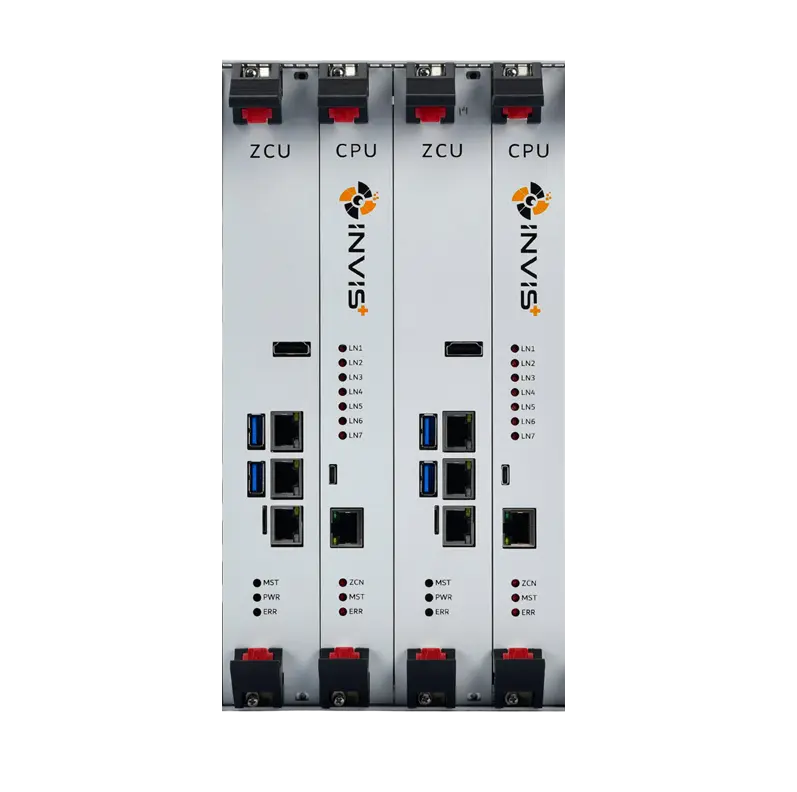
In every Electronic Toll Collection (ETC) system, especially at the field level (Plaza), one hardware component stands at the center of all operations:
the Zone Controller (ZC) — also known as the Lane Controller.
The Zone Controller is responsible for far more than data collection. It is the “brain” coordinating all field equipment, ensuring that every passing vehicle is detected, classified, validated, and sent to the central servers with accurate and synchronized data.
🔹 What does a Zone Controller actually do?
A robust ZC must:
- Communicate with all field devices: ANPR cameras, AVC systems, LiDARs, piezo sensors, RFID tag readers, traffic lights, and more.
- Collect and merge all sensor streams into a unified transaction record for every vehicle.
- Monitor device health, detect failures, and even auto-recover devices by restarting modules or applying recovery algorithms.
- Manage intra-plaza synchronization to minimize time drift among devices.
- Generate real-time monitoring reports for the entire plaza.
This makes the ZC one of the most critical subsystems of the entire ETC infrastructure — even more vital than many sensors themselves.
🔥 Why Redundancy Matters
If the Zone Controller fails, the entire lane fails.
Data stops, transactions break, accuracy drops, and enforcement becomes unreliable.
That is why a modern ETC system must implement hot redundancy:
🟦 Hot Redundancy = Zero Interruption
A highly available ZC architecture ensures:
- If one controller fails, a second ZC immediately takes over.
- Both units keep their datasets synchronized in real time.
- No sensor data is lost.
- No transaction is interrupted.
- No manual intervention is required.
Without this level of redundancy, even a short outage can create massive operational and financial impact.
🚀 How Invis Approaches ZC Redundancy
At Invis, our Zone Controller platform is designed with true hot redundancy, meaning:
- Active–active or active–standby switching within milliseconds
- Continuous synchronization of all operational data
- Failover without packet loss or transaction inconsistency
- Full recovery of field devices backed by automated algorithms
This ensures that ETC operators achieve:
- Maximum reliability
- Higher revenue assurance
- Accurate lane-level data
- Stable long-term system performance
🟩 Reliability at the lane level is not optional — it’s a requirement.
With the right Zone Controller architecture, an ETC system becomes faster, safer, and significantly more accurate.
If you’d like a deeper look into how Invis designs high-availability architectures for tolling and enforcement systems, feel free to connect or reach out.
#ETC #Tolling #ITS #ANPR #Redundancy #LaneController #ZoneController #Invis #HighAvailability #AVC #RFID #TrafficTechnology