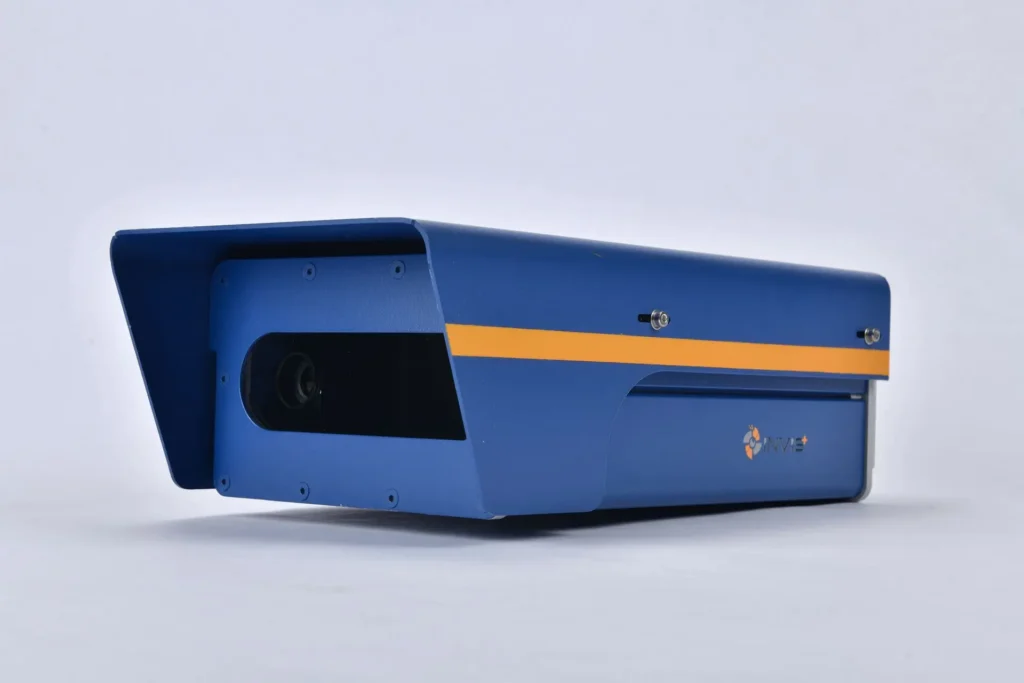
When developing a Multi-Lane Free Flow (MLFF) or All-Electronic Tolling (AET) project, many integrators source field components from different manufacturers — an AVC from one supplier, ANPR cameras from another, a Zone Controller (ZC) built in-house or purchased separately, and an RFID reader from yet another brand.
While this approach might seem flexible, it often introduces complex technical and operational challenges that affect performance, reliability, and maintainability.
Each of these systems speaks its own protocol, has its own timing behavior, and comes with its own integration limits. Getting them all to communicate efficiently requires custom interface development, and even then, certain functions remain out of reach.
For instance, in many hybrid setups, the AVC generates vehicle triggers, but it can’t use real-time image data from the camera because the camera is treated only as a license-plate reader — not a sensor source.
Similarly, AVCs often need to re-generate or correct triggers later in processing because they lack access to synchronized data from other sensors like transponder readers or ANPR Cameras.
The result is a system where valuable field data remains underused, and the fusion between sensors — image, axle, height, and transponder — never reaches its full potential.
This not only limits accuracy but also increases the risk of software errors, data mismatches, and performance instability.
By contrast, a one-stop-shop field system, like the architecture developed by INVIS, eliminates these gaps.
Because all key components — ZC, AVC, ANPR, and IR Illuminator — are designed and tested together, every data stream is synchronized at the source.
Our design philosophy ensures true multi-sensor fusion, allowing triggers, vehicle detection, and classification to be generated using combined logic from all sensors — not isolated modules.
The result: higher accuracy, lower latency, and drastically improved reliability.
Another major advantage is deeper integration testing.
When the manufacturer has access to the internal code and communication layers of all critical modules, testing becomes far more thorough, leading to fewer field issues and faster commissioning.
A unified field system also simplifies maintenance, as firmware updates and diagnostics can be managed seamlessly across all connected devices.
Ultimately, a fully integrated MLFF field ecosystem is not just about convenience — it’s about data coherence, operational stability, and long-term system reliability.
By choosing a single-source field solution, operators gain a smarter, cleaner, and more future-proof tolling infrastructure.
INVIS – When every component speaks the same language, the entire system performs better.